Mining hardware has undergone one of the fastest and most dramatic evolutions in modern technology. From simple computer processors to highly specialized machines, the tools used for mining—especially in the cryptocurrency space—reflect broader trends in computing power, energy efficiency, and technological innovation. Understanding this evolution helps explain where the industry is today and where it’s heading next.
The Early Days: CPU Mining
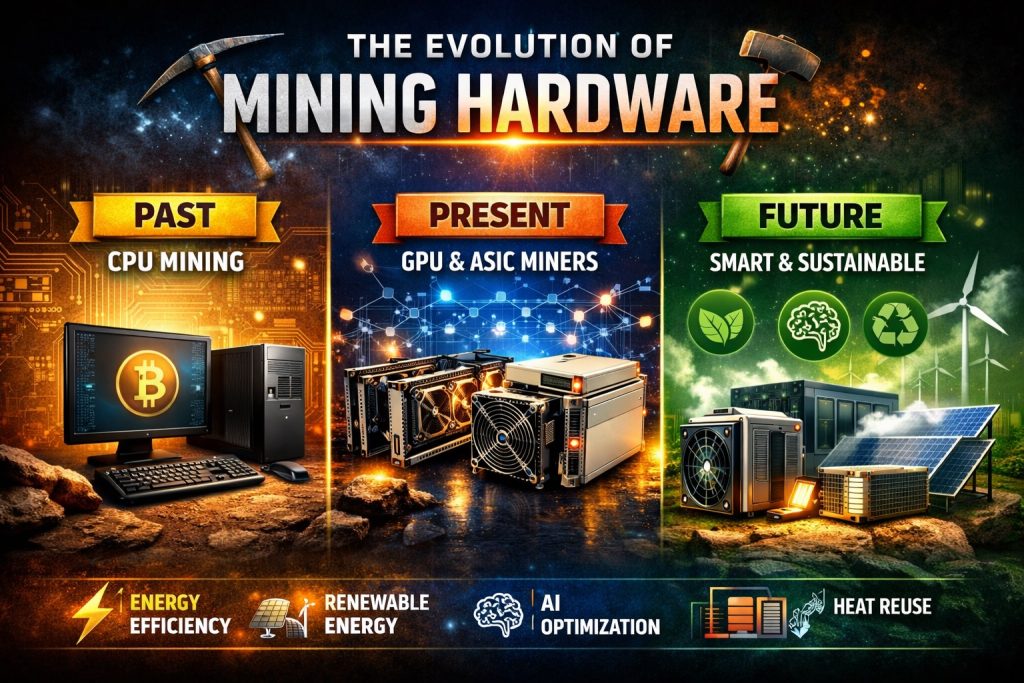
In the beginning, mining was accessible to almost anyone with a personal computer. Early cryptocurrencies like Bitcoin could be mined using Central Processing Units (CPUs)—the general-purpose processors found in standard laptops and desktops.
Key characteristics of CPU mining:
- Low entry barrier
- Minimal power consumption
- Highly decentralized participation
- Very low competition
As more miners joined the network, difficulty levels increased, making CPU mining inefficient and unprofitable over time. This set the stage for the next major leap.
The Rise of GPU Mining
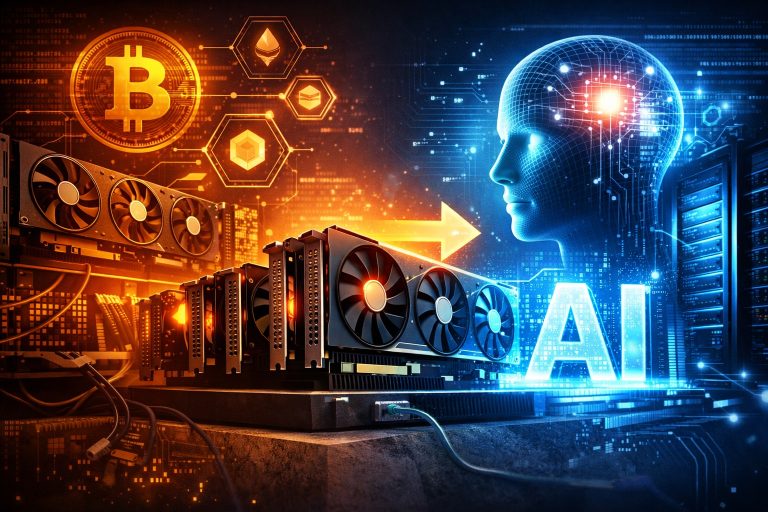
The shift from CPUs to Graphics Processing Units (GPUs) marked a turning point. GPUs, originally designed for rendering graphics and gaming, proved far more efficient at handling the parallel calculations required for mining.
Why GPUs took over:
- Significantly higher hash rates
- Better performance-to-power ratio
- Scalability through multi-GPU rigs
- Wider adoption across mining communities
GPU mining fueled the rapid expansion of mining farms and made mining a more serious commercial activity. It also sparked demand for high-performance graphics cards, affecting global hardware markets.
The ASIC Era: Specialized Powerhouses
As competition intensified, Application-Specific Integrated Circuits (ASICs) emerged. These machines are designed for a single purpose: mining a specific algorithm as efficiently as possible.
Advantages of ASIC miners:
- Unmatched efficiency and performance
- Lower energy cost per hash
- Industrial-scale profitability
Challenges they introduced:
- High upfront costs
- Reduced decentralization
- Limited flexibility (algorithm-specific)
- Faster obsolescence
ASICs dominate major proof-of-work networks today, transforming mining into a capital-intensive industry often concentrated in large facilities.
The Present: Efficiency, Sustainability, and Regulation
Today’s mining hardware landscape is shaped by more than raw performance. Energy efficiency, environmental impact, and regulatory pressures are just as important as hash rate.
Modern mining operations focus on:
- Advanced cooling systems (liquid and immersion cooling)
- Renewable energy sources
- AI-driven performance optimization
- Modular and scalable hardware designs
At the same time, some blockchain networks are moving away from traditional mining altogether, adopting alternative consensus mechanisms that reduce hardware dependence.
The Future of Mining Hardware
The future of mining hardware will be defined by innovation, sustainability, and adaptability.
Key trends to watch:
- Ultra-efficient ASICs with lower energy footprints
- Integration with renewable energy infrastructures
- Heat recycling for residential and industrial use
- Smarter hardware using AI and automation
- Hybrid models supporting multiple algorithms or use cases
As environmental concerns grow and regulations evolve, mining hardware will need to balance performance with responsibility.
Conclusion
The evolution of mining hardware—from CPUs to GPUs to ASICs—mirrors the rapid growth and maturation of the mining industry itself. What began as a hobbyist activity has become a global, industrial operation driven by advanced technology and strategic planning.