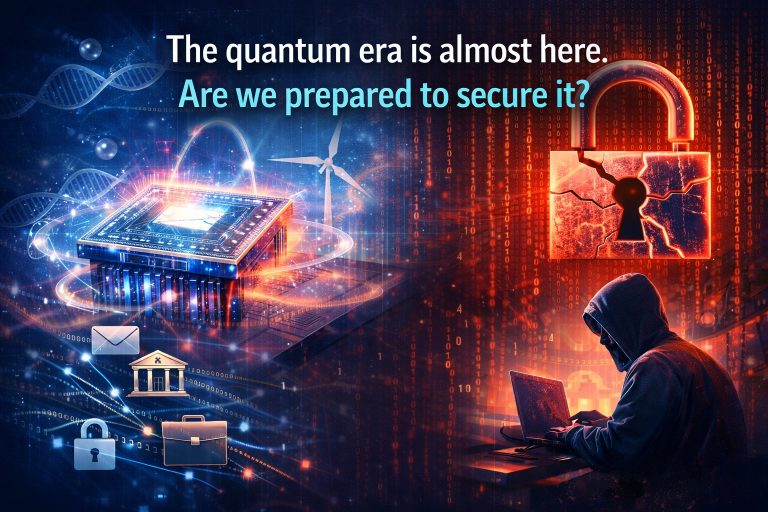
I’ve been warning about quantum computing and its potential to break the encryption underpinning our financial system—Bitcoin and cryptocurrencies included—for years. In fact, I first raised the issue seven years ago, pointing to projects like the Quantum Resistant Ledger. Even back then, some companies were already exploring how to defend against a future where today’s encryption could be rendered useless.
Fast forward seven years, and this concern has gone mainstream. Everyone from the Bank for International Settlements (BIS) to Citibank is now openly addressing the threat. Citibank’s latest report from the Citi Institute is particularly revealing. It estimates that quantum computers could break widely used public-key encryption systems—used by banks and blockchains alike—with a 19–34% probability by 2034 and a 60–82% probability by 2044. In practical terms, that suggests most cryptocurrencies and bank security systems could be compromised within the next two decades.
One of the most important ideas explored in the report is “Harvest Now, Decrypt Later” (HNDL). This is a cybersecurity strategy where attackers collect encrypted data today and store it until quantum computers are powerful enough to decrypt it in the future. The attack isn’t about speed—it’s about patience. Valuable data is stolen now and unlocked later. Palo Alto Networks has examined this threat in depth, and the implications are deeply unsettling.
The Citi Institute outlines several major quantum-related risks:
- Cryptographic Risk: Quantum computers could break today’s encryption, undermining digital signatures, secure communications, IoT systems, and critical infrastructure.
- Economic Exposure: A single-day quantum attack on a major U.S. bank could wipe out more than $3 trillion in GDP, with cascading effects across finance, healthcare, and telecommunications.
- Blockchain Vulnerability: Quantum attacks could compromise blockchain security by breaking digital signatures, exposing funds tied to already-revealed public keys.
To address these risks, the report urges financial institutions to act immediately by:
- Strengthening cryptographic foundations using standards set by bodies like ISO and NIST
- Building crypto-agile systems that can rapidly adapt to new standards
- Deploying quantum-safe shields to counter HNDL threats today
- Adopting quantum-ready cloud infrastructure to accelerate post-quantum cryptography (PQC) adoption
- Collaborating across ecosystems with vendors, partners, and regulators to ensure smooth migration
The report then proposes a five-step action plan:
- Identify where public-key cryptography is used across the organisation
- Prioritise critical systems and long-lived data
- Enable crypto-agility and hybrid cryptographic approaches
- Migrate through phased, regulator-aligned transitions
- Sustain ongoing key management and algorithm upgrades as quantum capabilities evolve
The conclusion is blunt: quantum computing poses an unprecedented threat to global security and the economy, with potential losses measured in trillions of dollars. While post-quantum standards already exist, the real challenge is deploying them at scale. Institutions that delay risk exposing sensitive data long before quantum computers fully arrive. Collaboration across industries is essential for a smooth and secure transition.
If you missed the BIS report on quantum computing, here’s the short version:
1️⃣ Quantum risk is real, not theoretical
Future quantum machines can break the cryptography securing banks, payment rails, and blockchains.
2️⃣ Central banks are already upgrading infrastructure
The BIS, Bank of France, Bundesbank, and Bank of Italy have successfully tested post-quantum cryptography in live-like payment systems such as TARGET2.
3️⃣ Quantum-safe payments already work
Liquidity transfers using quantum-resistant digital signatures have been executed successfully.
4️⃣ Performance trade-offs are manageable
Post-quantum cryptography is slower, but well within acceptable limits for critical financial infrastructure.
5️⃣ Crypto won’t be exempt
Stablecoins, tokenised deposits, and real-world assets integrated with traditional rails will need to meet post-quantum security standards.
🌍 Real-world example
The Eurosystem replaced traditional RSA signatures with quantum-resistant alternatives for central bank liquidity transfers—the same infrastructure supporting wholesale money markets.
If central banks are hardening these systems now, every digital asset that connects to them will inherit these requirements.
Why This Matters for Crypto and Stablecoins
Stablecoins are no longer just software—they’re financial infrastructure.
- Issuers depend on banking rails
- On- and off-ramps rely on payment systems
- Institutional adoption demands long-term security assurances
In this context, quantum-safe cryptography becomes a baseline credibility requirement, not a bonus feature.
What Happens Next
- Banks and financial market infrastructures begin phased quantum-safe migrations
- Regulators embed post-quantum requirements into standards
- Stablecoin and RWA platforms design for cryptographic agility
- The boundary between traditional finance and on-chain money continues to blur
The future of money is being secured right now—quietly, deliberately, and with crypto very much in scope.
Source: thefinanser.com Edited by Bernie