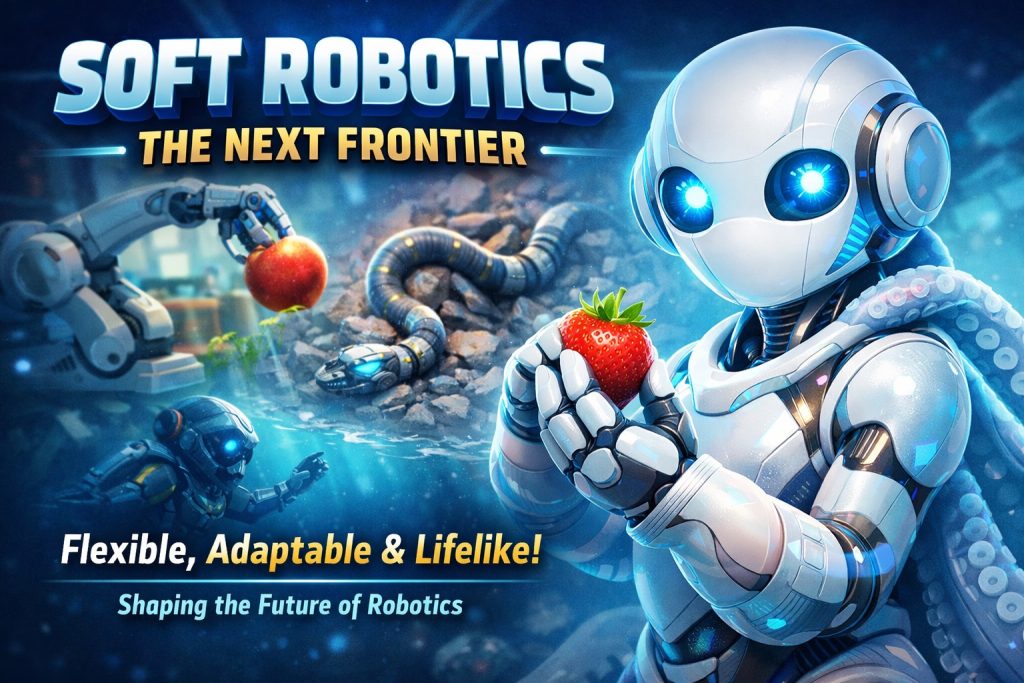
In a world dominated by rigid, metallic robots, a new wave of innovation is emerging—soft robotics. Unlike traditional robots built from hard materials like steel and aluminum, soft robots are made from flexible, compliant materials such as silicone, rubber, and even textiles. This flexibility opens the door to applications and capabilities that were previously unimaginable in robotics.
What Makes Soft Robotics Different?
Traditional robots excel in precision, strength, and speed but often struggle with tasks requiring adaptability or delicate touch. Soft robots, on the other hand, mimic the natural flexibility found in living organisms. Their materials allow them to squeeze through tight spaces, handle fragile objects, and interact safely with humans. This makes them ideal for applications ranging from healthcare to search-and-rescue operations.
Key Innovations Driving Soft Robotics
- Bio-Inspired Design
Many soft robots take inspiration from nature, mimicking the movements of octopuses, worms, and even human muscles. This biomimicry enables robots to move in fluid, organic ways that rigid robots cannot achieve. - Advanced Materials
Smart polymers and hydrogels are changing the game. These materials can expand, contract, or change stiffness in response to stimuli like heat, electricity, or light, allowing soft robots to perform complex tasks autonomously. - Pneumatic and Hydraulic Systems
Soft robots often use air or fluid pressure to move. These systems are lightweight, low-cost, and highly adaptable, making them perfect for delicate manipulation tasks such as harvesting fruits or assisting in surgery. - Integration with AI and Sensors
The combination of flexible materials and intelligent control systems allows soft robots to adapt to unpredictable environments, detect obstacles, and respond in real time to dynamic conditions.
Applications of Soft Robotics
- Healthcare: Soft robotic exosuits assist with rehabilitation, offering gentle, adaptive support to patients recovering from injuries. Robotic grippers handle delicate tissues in surgery.
- Agriculture: Soft robotic arms can pick fruits without bruising them, optimizing harvest efficiency.
- Exploration and Rescue: Flexible robots can navigate rubble, tight tunnels, and underwater environments where rigid robots cannot.
- Consumer Products: Soft robotic wearables, toys, and assistive devices are starting to make their way into everyday life.
Challenges Ahead
Despite the promise, soft robotics faces hurdles. Material durability, precise control, and energy efficiency remain major challenges. Researchers are continuously developing better materials, actuators, and AI algorithms to overcome these obstacles.
The Future of Soft Robotics
Soft robotics represents a paradigm shift in how we think about machines. By combining flexibility, adaptability, and intelligence, these robots promise to revolutionize industries from medicine to manufacturing. As research continues, we may soon see robots that move, feel, and interact in ways that are truly lifelike.
In short, the future isn’t just about stronger, faster robots—it’s about smarter, softer ones.