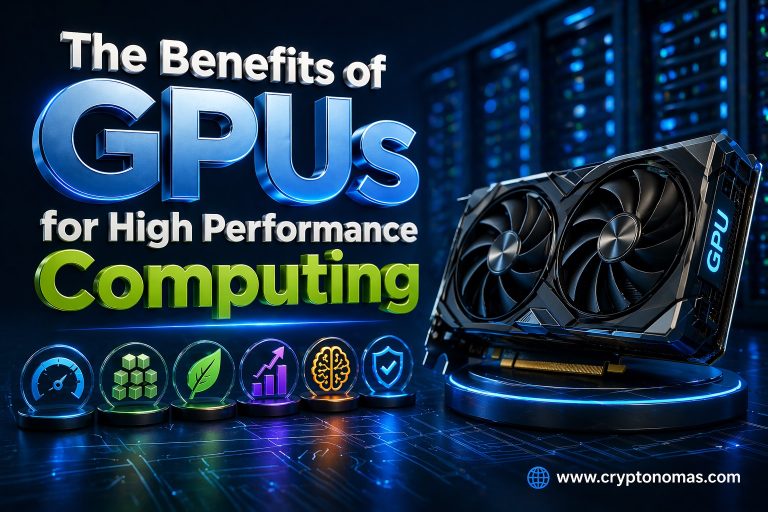
High-Performance Computing (HPC) has become a vital part of the growth and evolution of Artificial Intelligence (AI) and Machine Learning (ML). As the amount of data we generate continues to increase, the need for powerful computing resources becomes more important. HPC provides the necessary computational power to analyze and process this data quickly and effectively. This article will explore how HPC supports AI and ML, the benefits it offers, and what the future may hold for these technologies.
What is HPC?
High-Performance Computing refers to the use of supercomputers and advanced processing techniques to solve complex problems. Unlike standard computers, which can handle limited tasks, HPC systems are designed to perform many calculations simultaneously. This capability allows researchers to work with large datasets, run complex simulations, and complete tasks that require significant computational resources.
How HPC Works with AI and ML
1. Faster Training
One of the most significant advantages of HPC in AI and ML is the speed it provides for training models. Training a complex model, especially in deep learning, can take a long time on regular computers—often days or even weeks. HPC systems can reduce this time to hours or minutes by using multiple processors and graphics processing units (GPUs) to handle calculations in parallel. This rapid training allows researchers to iterate quickly, testing different approaches and refining their models for better performance.
2. Managing Big Data
AI and ML thrive on data, and the more data available, the better the models can learn and make predictions. HPC is essential for managing and processing large datasets, which can include millions or even billions of data points. For example, in natural language processing, models need vast amounts of text data to understand language patterns. HPC systems can efficiently analyze this data, enabling the training of robust models that can perform tasks like translation, sentiment analysis, and more.
3. Complex Models
With HPC, researchers can develop more sophisticated and complex models. Traditional computing resources might limit the complexity of algorithms due to processing power constraints. However, HPC allows for experimentation with intricate architectures, such as deep neural networks with many layers and parameters. This capability leads to more accurate and nuanced predictions, significantly improving applications in fields such as healthcare, finance, and autonomous systems.
4. Real-Time Processing
In many AI applications, real-time processing is crucial. For instance, self-driving cars must make instantaneous decisions based on sensor data, and fraud detection systems need to identify suspicious activities in real-time. HPC supports these needs by providing the necessary computational speed to analyze incoming data as it arrives. This quick analysis enables immediate responses, which is vital for safety and efficiency in various applications.
5. Collaboration and Research
HPC encourages collaboration among researchers, universities, and organizations. By providing shared access to large-scale computing resources, teams can work together on challenging problems that require significant computational power. This collaborative environment fosters innovation and accelerates discoveries in AI and ML, allowing experts from different fields to combine their knowledge and skills.

Benefits of HPC in AI and ML
- Cost Savings: While investing in HPC systems can be expensive, the long-term cost savings are significant. Reduced training times and faster experimentation mean that organizations can achieve results more quickly, ultimately saving money on resources and labor.
- Flexibility: HPC resources can be scaled up or down based on project needs. This flexibility allows researchers to allocate resources effectively and avoid unnecessary expenses, making HPC accessible for both large institutions and smaller research teams.
- Access to Advanced Tools: HPC environments often provide access to cutting-edge tools and frameworks that enhance research capabilities. These tools can streamline the development process and enable researchers to focus on innovation rather than infrastructure.
- Improved Accuracy and Reliability: The ability to run complex models on large datasets leads to better-trained AI systems. This improved accuracy is critical in applications such as medical diagnosis, where correct predictions can have significant consequences.
Future Directions
The integration of HPC in AI and ML is set to evolve further as technology advances. Some potential future developments include:
- Quantum Computing: As quantum computing technology matures, it may offer unprecedented computational power for AI and ML tasks. Quantum computers can process information in ways that traditional computers cannot, potentially solving problems that are currently intractable.
- More Efficient Algorithms: Ongoing research aims to create algorithms that require less computational power while maintaining or increasing accuracy. Such advancements could make AI and ML more accessible to a broader range of users and applications.
- Cloud-Based HPC: The rise of cloud computing allows for greater access to HPC resources. This development democratizes high-performance computing, enabling smaller organizations and individuals to leverage powerful computing without the need for significant upfront investment in hardware.
- Edge Computing: Combining HPC with edge computing—processing data closer to where it is generated—can enhance real-time processing capabilities. This approach is particularly valuable in IoT (Internet of Things) applications, where quick decision-making is essential.
Conclusion
High-Performance Computing plays a crucial role in the development and advancement of Artificial Intelligence and Machine Learning. By providing the computational power necessary to handle large datasets, speed up model training, and enable the creation of complex algorithms, HPC helps researchers and organizations push the boundaries of what is possible. As technology continues to evolve, the synergy between HPC, AI, and ML will lead to groundbreaking innovations across various industries, transforming how we live and work. The future holds exciting possibilities, and the role of HPC in shaping that future cannot be overstated.