High-Performance Computing (HPC) plays a vital role in many advanced tasks, from scientific research to complex simulations across various fields. As technology evolves, several key trends and innovations are set to change the HPC landscape significantly. Here’s a deeper look at what to expect in the coming years.
1. Exascale Computing
Exascale computing refers to systems capable of performing at least one exaflop, or a billion billion calculations per second. This is a monumental leap from petascale systems, which can handle only a million billion calculations. Countries like the U.S., China, and members of the European Union are investing heavily in exascale projects.
These powerful systems will greatly enhance our ability to run complex simulations and analyze massive datasets. For example, in climate science, exascale computing will allow researchers to create more accurate models of climate change, helping us understand and predict its impacts more effectively. In healthcare, it may enable the analysis of genomic data to discover new treatments and personalized medicine approaches.
2. AI and Machine Learning
Artificial intelligence (AI) and machine learning (ML) are becoming increasingly important in HPC. These technologies excel at processing large amounts of data quickly and efficiently. By integrating AI with HPC, we can solve problems faster and more accurately.
For instance, in finance, AI can analyze market trends and make predictions based on vast datasets, helping investors make informed decisions. In manufacturing, AI can optimize supply chain management by predicting demand and improving efficiency. This combination of HPC and AI not only speeds up processes but also leads to better outcomes in various industries.
3. Quantum Computing
Quantum computing is an exciting and rapidly developing field that has the potential to revolutionize HPC. Unlike traditional computers, which use bits to process information, quantum computers use qubits. This allows them to perform multiple calculations simultaneously, making them ideal for solving complex problems that are currently beyond the reach of classical computers.
As quantum technology matures, we will see hybrid systems that combine classical and quantum computing. This integration will enhance HPC capabilities, particularly in optimization problems, cryptography, and complex simulations. For example, in drug discovery, quantum computing could help identify new compounds much faster than current methods.
4. Energy Efficiency
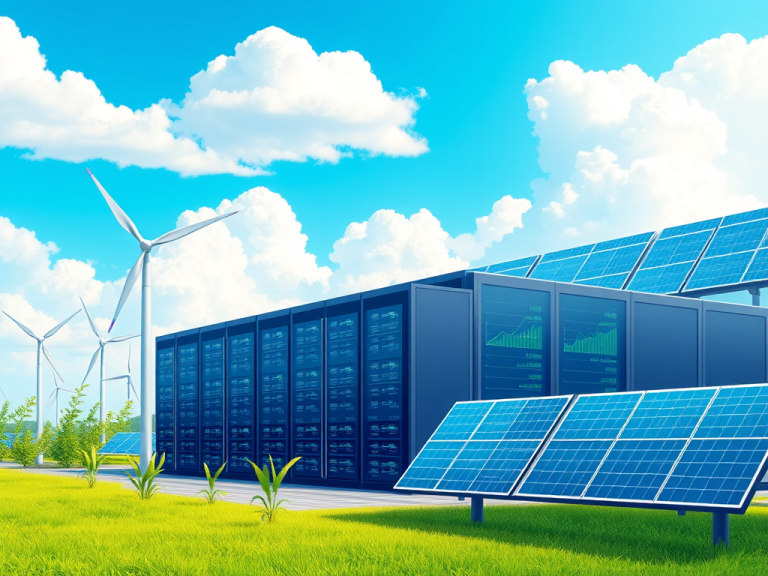
As HPC systems grow in power, they also consume more energy. This raises concerns about sustainability and environmental impact. The future of HPC will focus on energy efficiency and sustainability, aiming to reduce the carbon footprint of these powerful systems.
Innovations in hardware design, such as energy-efficient processors and advanced cooling technologies, are critical. Additionally, many HPC centers are exploring the use of renewable energy sources, like solar and wind, to power their operations. By prioritizing energy efficiency, the HPC community can reduce costs and mitigate environmental effects.

5. Edge Computing
Edge computing is a growing trend that complements HPC by processing data closer to where it is generated. This is particularly important in the Internet of Things (IoT) landscape, where devices like sensors and cameras generate vast amounts of data in real time.
By bringing computation to the edge, organizations can reduce latency and bandwidth usage. For example, in autonomous vehicles, edge computing allows for immediate processing of data from sensors, enabling quicker decision-making. When combined with HPC, edge computing can enhance overall system efficiency and responsiveness.
6. Advanced Interconnects
The performance of HPC systems heavily relies on interconnect technologies that facilitate communication between processors. Innovations in networking are crucial for improving data transfer speeds and reducing bottlenecks.
New technologies, such as optical interconnects and advanced protocols like InfiniBand, are being developed to enhance communication within HPC systems. These advancements will allow for faster data exchanges, enabling HPC systems to operate more efficiently and effectively, particularly as they scale up.
7. Software Development
As HPC systems become more complex, there is a growing need for better software to manage them. The evolution of software and programming models is essential for fully utilizing the capabilities of diverse hardware architectures.
New programming languages and frameworks are being created to simplify HPC programming, making it more accessible for users. For example, projects like OpenMP and MPI (Message Passing Interface) are helping to standardize programming approaches, allowing developers to write code that can run efficiently on various systems. This will be crucial as HPC continues to evolve and diversify.
Conclusion
The future of High-Performance Computing is bright, with many exciting trends and innovations on the horizon. As we develop exascale systems, integrate AI and quantum computing, and focus on energy efficiency and sustainability, HPC will continue to drive advancements across numerous fields.
Staying informed about these developments is essential for researchers, businesses, and policymakers aiming to harness the full potential of HPC in the coming years. By embracing these trends, we can unlock new possibilities and solutions to some of the world’s most pressing challenges.